
Managing a modern commercial or industrial facility requires navigating a landscape of unpredictable operational risks. Chief among these challenges is the growing frequency and intensity of severe weather events. From harsh winter blizzards and freeze-thaw cycles to summer heatwaves and torrential downpours, extreme weather tests the structural integrity, mechanical systems, and operational readiness of commercial properties.
For facility managers and property asset directors, maintaining business continuity goes far beyond responding to emergencies as they happen. It requires a disciplined shift from reactive fixes to a comprehensive, proactive strategy for seasonal preparedness. Unplanned downtime, structural failures, and costly emergency repairs can rapidly erode property value and disrupt tenant operations.
To safeguard physical assets and protect bottom lines, facility leaders rely on structured risk assessments, long-term vendor partnerships, and proactive maintenance routines. By systematically hardening building envelopes, securing site grounds, and protecting critical internal utilities, facility managers ensure that their properties remain safe, operational, and resilient—no matter what the forecast brings.
Strategic Seasonal Readiness & Vendor Engagement Matrix
Effective facility management is an ongoing process that ideally begins well before any storm warnings are on the horizon. To develop a comprehensive seasonal readiness strategy, it is crucial for facility managers to create a detailed and structured calendar. This calendar should meticulously outline all maintenance tasks on a quarter-by-quarter basis, ensuring nothing is overlooked as the seasons change. In the spring, attention must be focused on inspecting hardscapes, which may include pathways, driveways, and patios, due to the potential damage from freezing and thawing cycles. Additionally, the end of winter brings the need to assess potential water ingress that results from melting snow and ice, which can lead to seepage into basements and foundation cracks. As summer arrives, it becomes paramount to ensure that mechanical cooling systems, such as HVAC units, are operating at peak efficiency to combat the heat. Roof drainage systems also require vigilant maintenance as they need to handle summer storms efficiently. When fall approaches, efforts shift toward clearing gutters of fallen leaves and debris, critically testing the heating infrastructure to withstand colder temperatures, and winterizing exterior lines to prevent them from freezing. Wintertime requires the most intensive monitoring, with continuous checks on thermal envelopes – the walls, roofs, and windows that separate inside from outside – to ensure energy efficiency, alongside maintaining site mobility amidst possible snow and ice.
A vital aspect of this strategic approach is the contracting and vendor management aspect, forming the backbone of sustained facility operations. Often, waiting until a severe weather event is imminent to request emergency maintenance leads to inevitable delays in response and potentially inflated service costs. To counter these challenges, seasoned facility managers work proactively to build resilient operations by securing binding service level agreements well in advance of any anticipated issues. These agreements meticulously detail all service expectations, including clearly defined response windows, agreed-upon hourly rates, and the specific scope of work that will be provided for critical services, ensuring transparency and preparedness.
When it comes to selecting the right partners for these services, facility leaders must look beyond mere cost considerations. A thorough evaluation process should include assessing each vendor’s capacity to handle increased demand, their backup staffing plans to deal with potential workforce shortages, and their fuel reserves, which become crucial during widespread regional emergencies when traditional resources may be limited. By establishing strong relationships with reliable and dependable service providers, facility managers can ensure operational continuity. For instance, a trustworthy snow removal company is essential for maintaining site safety during heavy winter months, while dependable commercial fuel services are crucial for keeping backup generators and fleet vehicles operational. These partnerships are key to ensuring that a facility continues to function smoothly, even when local municipal resources are severely stretched.
Envelope Hardening: Protecting Roofs and Overhead Structures
A facility’s roof serves as the primary barrier between the interior space and the elements of nature, making it a quintessential component in safeguarding against severe weather conditions. Despite this vital role, it is frequently overlooked until a significant problem arises, often in the form of a leak or structural compromise. The process of ‘envelope hardening’ begins with the implementation of thorough and regularly scheduled inspections, which are essential in maintaining the roof’s integrity. These inspections are meticulously carried out twice a year, every spring and fall, and are also a crucial step immediately following major weather events that could potentially cause or uncover damage. During these inspections, facility managers undertake detailed evaluations of key areas such as flashing seams, where the roof covering meets vertical surfaces; expansion joints, which allow for movement due to temperature fluctuations; structural parapets, which are small barriers at the edge of roofs; and perimeter drainage paths, which are crucial for diverting water away from the structure. By identifying and remedying minor vulnerabilities in these areas early, facility managers can prevent them from transforming into significant ingress points for water, which can lead to extensive and costly damage.
Winter months pose their own set of challenges for roofs and overhead structures, predominantly due to the risks stemming from the accumulation of snow loads and the formation of ice dams. The weight of heavy, wet snow places enormous stress on roof decks, potentially jeopardizing their structural integrity. Compounding this issue is inadequate thermal insulation, which allows heat from within the building to escape. This escaping heat melts the layer of snow closest to the roof, and as this meltwater travels to the colder edges of the roof, it refreezes, forming ice dams. These ice dams block the natural flow of additional melting snow and ice, causing water to pool and eventually seep under the roof’s protective membranes. To prevent these winter-specific hazards, several proactive measures are essential, such as regularly clearing scuppers to facilitate proper drainage, installing self-regulating heat trace cables to prevent ice dam formation, and performing precise load calculations to ensure the roof can safely bear the winter load.
Ensuring the roof’s structural integrity throughout the year is an ongoing effort that involves not only inspections and maintenance but also strategic partnerships. Facility managers often enter into structured service contracts with experienced commercial roofing contractors who specialize in conducting regular preventative maintenance. An ongoing commercial roofing service plan is invaluable because it addresses issues such as general wear and tear, degradation due to ultraviolet light exposure, and separations at the seams before these minor problems can evolve into substantial defects.
Winter Grounds Operations: Safety, Mobility, and Access Control
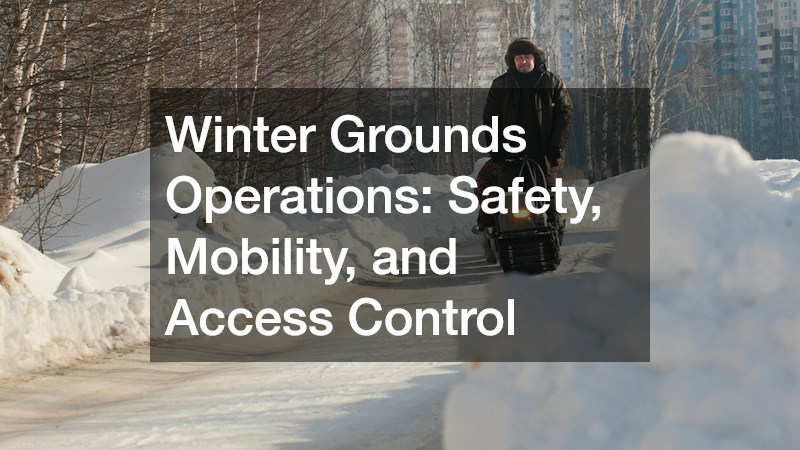
When winter storms strike, maintaining safe access across parking lots, loading docks, and pedestrian walkways becomes an immediate operational priority. Facility managers prepare for winter operations by developing detailed site maps that outline key priority zones. Drive lanes, primary building entrances, fire hydrants, and emergency exits are designated as high-priority areas, while secondary parking zones and snow storage locations are mapped out to prevent accidental blockages.
Clearing large commercial footprints requires specialized heavy machinery and experienced equipment operators. Pushing heavy snow accumulation off expansive parking areas, distribution centers, and freight corridors demands a coordinated approach to prevent structural damage to curbs, catch basins, and utility heads. Operations teams deploy heavy-duty fleet trucks, front-end loaders, and specialized attachments for efficient industrial snow plowing, keeping critical logistics routes open and fully functional.
Beyond bulk snow removal, mitigating slip-and-fall hazards requires a proactive approach to surface treatment. Chemical de-icing and anti-icing strategies prevent ice from bonding to pavement. Facility managers utilize pre-storm brine applications to lower the freezing point of water on paved surfaces before snowfall begins. During active freezing events, targeted ice management protocols ensure that salt or eco-friendly de-icing compounds are applied efficiently, minimizing chemical runoff while maintaining high traction for pedestrian and vehicular traffic.
Hardscape Preservation and Exterior Metal Protection
Severe weather inflicts long-term damage on ground-level infrastructure through continuous freeze-thaw cycles. When water penetrates minor cracks in asphalt or concrete, it expands upon freezing, weakening the sub-base and creating severe surface cracking. Over time, heavy traffic compresses these weakened areas, forming deep potholes and structural pavement failures.
To preserve hardscapes, facility managers implement rigorous fall maintenance routines. Cracks are cleared of debris and sealed with hot-pour rubberized joint sealants, preventing moisture from reaching the sub-base. Catch basins, storm drains, and swales are inspected and cleared to ensure that heavy rain and melting snow drain rapidly off paved surfaces rather than pooling. Partnering with professional commercial paving contractors allows facility managers to schedule timely repaving, asphalt patching, and sub-base stabilization during optimal weather windows, preventing small surface defects from turning into costly structural hazards.
Exterior metal infrastructure—including fire escapes, architectural railings, structural posts, gate systems, and rooftop mechanical enclosures—is equally vulnerable to seasonal weather. Constant exposure to rain, snow, UV rays, and corrosive de-icing salts rapidly accelerates rust and metal degradation. Facility managers protect these capital assets by specifying durable protective coatings. Utilizing high-performance commercial powder coating on outdoor metal structures provides an impermeable barrier against moisture and salt corrosion, extending the service life of exterior steelwork and maintaining the property’s overall aesthetic appeal.
Safeguarding Interior Utilities, MEP Systems, and Mechanical Infrastructure
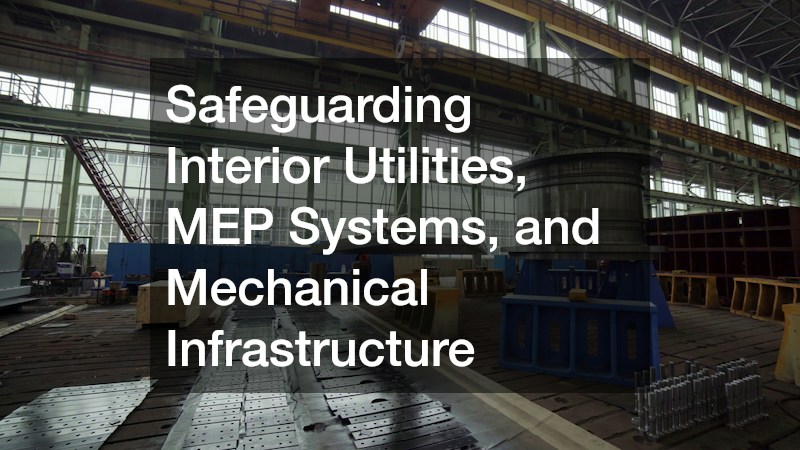
Extreme temperatures present severe risks to internal mechanical, electrical, and plumbing (MEP) systems. During deep freezes, sub-zero temperatures can quickly penetrate unheated mechanical spaces, loading docks, and exterior wall cavities, freezing standing water within fire sprinkler systems and supply lines. Expanding ice exerts massive pressure inside pipes, leading to structural bursts that can cause hundreds of thousands of dollars in water damage and operational downtime.
To protect interior utilities, facility managers conduct thorough pre-winter mechanical audits. Vulnerable piping is wrapped with high-grade elastomeric insulation and equipped with self-regulating heat trace cables. Automated sensors monitor ambient temperatures in unheated areas, sending real-time alerts to facility management teams if temperatures drop below safe thresholds. Contracting with an experienced commercial plumbing team ensures that pressure relief valves, backflow preventers, and main shut-off systems are regularly serviced and ready for rapid emergency isolation if a pipe breach occurs.
System failure during a severe storm often demands fast-track, targeted intervention. When unexpected high winds damage flashings or hail punctures roof membranes, immediate structural repairs are required to stop water ingress from damaging sensitive mechanical spaces below. Having immediate access to reliable commercial roof repair services allows facility managers to quickly deploy emergency patch teams, stabilizing the building envelope before water spreads to internal electrical panels, ceiling grids, or tenant spaces.
Post-Storm Assessment, Capital Planning, and Continuous Improvement
The work of a facility manager does not end when a severe weather event subsides. The post-storm phase is critical for assessing physical infrastructure, identifying hidden damage, and refining operational response protocols. Immediately following a severe event, maintenance teams conduct structured walkthroughs to inspect roof membranes, drainage systems, exterior walls, and electrical rooms. Catching minor moisture intrusion, loose flashings, or compromised structural seals early prevents long-term mold growth and structural decay.
Continuous improvement requires tracking operational metrics and financial data using Computerized Maintenance Management Systems (CMMS). By logging storm-related work orders, material usage, emergency response times, and repair expenditures, facility managers gain valuable data on building performance. This data reveals recurring failure points—such as a specific roof section prone to ponding or an outdated HVAC unit that struggles during heatwaves—enabling facility directors to make informed decisions during annual capital planning cycles.
Finally, post-event debriefs with internal staff and external contractors help refine Emergency Action Plans (EAPs). Gathering feedback on vendor communication, equipment availability, and response speed allows facility leaders to update their standard operating procedures continuously. Updating emergency contact trees, adjusting vendor SLAs, and reallocating maintenance budgets ensures that the facility becomes more resilient with every passing season.
Handling Severe Seasonal Weather With This Guide
Managing commercial and industrial infrastructure against the realities of severe seasonal weather is a continuous process that demands strategy, foresight, and disciplined execution. Facility managers who rely solely on emergency response face higher operational costs, frequent business disruptions, and accelerated asset depreciation.
By taking a holistic approach—hardening the building envelope, maintaining site mobility, protecting exterior hardscapes, and safeguarding mechanical infrastructure—facility leaders can protect their physical assets and ensure uninterrupted business continuity. Securing strong vendor partnerships, executing scheduled preventative maintenance, and leveraging post-storm data for future capital planning transforms weather readiness from an operational burden into a strategic advantage. Ultimately, a proactive approach to facility maintenance protects tenant safety, preserves structural integrity, and secures the long-term value of the commercial asset.